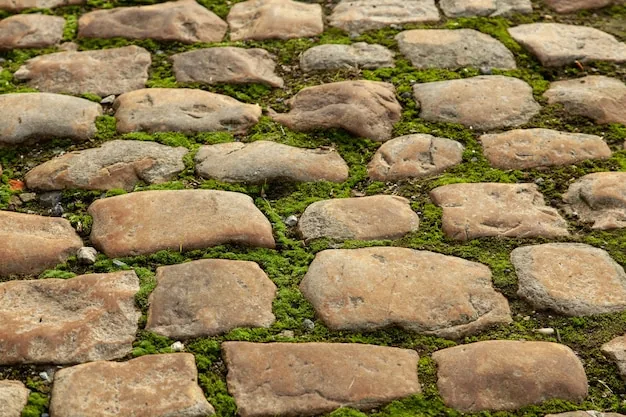
Stone doesn't hurry, and neither do we
The beliefs that shape how we choose, place, and reinforce stone in a garden.
Back to homeOur foundation
We start from the idea that stone was already doing its job before we arrived — sitting in a hillside, forming in a bed, weathering under its own conditions. Our work is to place it back into a garden in a way that respects what it already is, rather than forcing it into a shape it was never meant to hold.
Philosophy and vision
A garden built with stone should still make sense a decade from now. That's the standard we hold each recommendation to — not how a wall or a rockery photographs on the day it's finished, but how it reads and how it holds after ten winters of frost and ten summers of rain.
Core beliefs
The site speaks first
Before any stone is recommended, we look at exposure, drainage, and what's already growing or standing there.
Structure precedes decoration
A wall that looks right but drains poorly is a problem deferred, not solved.
Honesty about timelines
We'd rather tell you a wall can wait a season than push work that isn't yet warranted.
Weather is part of the design
Frost resistance and slip rating aren't footnotes — they shape which stone belongs where.
Principles in practice
This shows up in specific choices: opening a trial hole rather than guessing footing depth, leaving samples with you for a week instead of deciding under showroom light, and numbering rockery placement so the heaviest stone moves first, while access to the garden is still open.
The human-centered approach
Every garden belongs to someone with their own routines, their own view from the kitchen window, their own sense of what the space is for. A plan that ignores that, however sound structurally, misses something important. We ask about how the space is used before we ask about stone types.
Innovation through intention
We're not drawn to new methods for their own sake. When we do change an approach — a different drainage detail, a new way of documenting a wall cross-section — it's because it serves the garden better, not because it's newer.
Integrity and transparency
Condition reviews are written down, not just spoken. Where an observation can reasonably be left as it is for now, we say so plainly, even when a more urgent framing might move things along faster.
Community and collaboration
Larger projects often involve a contractor with lifting gear, a planting specialist, or simply a neighbour who's dealt with a similar slope before. We see our role as one part of that wider effort, not the only voice in the room.
Long-term thinking
A staged plan that spreads work across seasons, sized to your budget and your garden's needs, tends to serve better than a single large push. We design with the years ahead in mind, not just the weeks ahead.
What this means for you
You can expect straightforward notes rather than sales language, a plan you can hold onto and act on at your own pace, and stone recommendations that account for how they'll actually weather where you live.
If this way of working suits you
Send us a message about your garden and we'll take it from there.
Get in touch